Taking a Bike on a Train in Spain: Rules & Booking
Taking a bike on a train in Spain? Compare folding, packed and full-size bike rules, then check booking needs before choosing your service.
Last updated November 2026: taking a bike on a train in Spain is possible on some services, but not on every train in every form. Your options depend on the operator, the service type and whether the bike is fully assembled, folded or packed in a cover. Use the Renfe table below for each leg of your Spanish cycling trip.
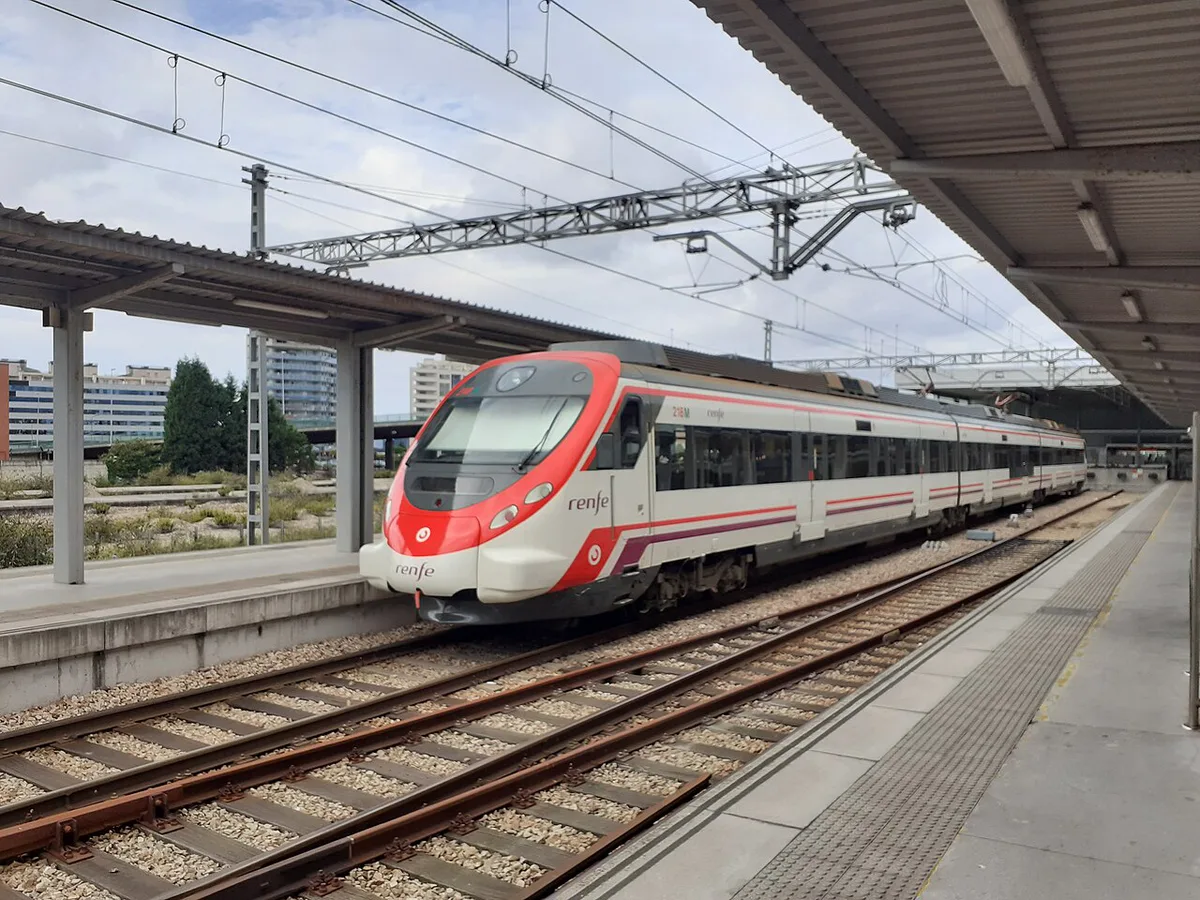
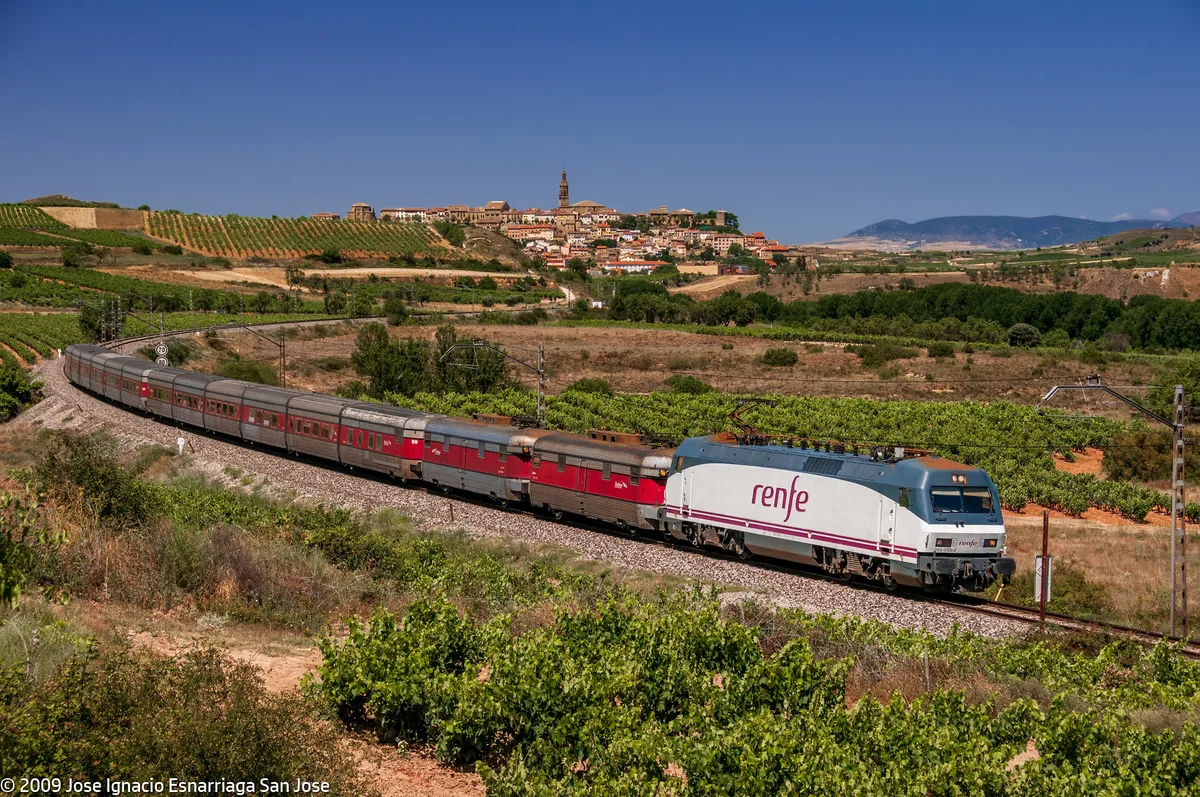
Featured image: Делфина, CC0, via Wikimedia Commons.
Taking a Bike on a Train in Spain: Renfe Rules at a Glance
On Renfe, an accepted full-size bike can be up to 200 cm long, or about 78.7 inches. AVE, Avlo, Alvia, Euromed and Intercity trains do not allow it in assembled form. This table covers standard non-electric bikes, using the bicycle luggage rules on Renfe's official website. Match each row to the exact service on your itinerary. “No add-on” describes the bike requirement. It does not replace your passenger ticket or guarantee space.
| Renfe service | Folding bike | Disassembled, covered bike | Full-size assembled bike |
|---|---|---|---|
| Cercanías | No add-on | No add-on | No add-on or advance booking |
| Unreserved Media Distancia, Regional and Proximidad; metric-gauge Media Distancia | No add-on | No add-on | No add-on |
| Reserved Media Distancia, Regional and Proximidad | No add-on | No add-on | Tren+bici add-on |
| Avant | No add-on | No add-on | Bicycle add-on, subject to availability |
| AVE (including international), Alvia, Euromed and Intercity | No add-on | Free bicycle add-on | Not allowed |
| Avlo | Additional luggage add-on | Additional luggage add-on | Not allowed |
Folded, Disassembled or Fully Assembled?
Measure your bike as it will board, including any cover. For a folding model, add its height, length and width. That total cannot exceed 180 cm, about 70.9 inches. Packing a conventional bike involves more than removing 1 wheel. Its handlebars must also be turned parallel to the frame, and a cover is mandatory. Packed bikes have a size limit of 140 × 90 × 40 cm, about 55 × 35 × 15.7 inches.
- Folding bike: Renfe allows 1 per person, fully folded. A cover is optional. You may move it through the station unfolded, but fold it before boarding and use the luggage space.
- Disassembled bike: Remove at least 1 wheel, turn the handlebars and cover the bike. You may take it through the station before taking it apart. Pack it before boarding, follow staff instructions and use the special luggage space.
- Full-size bike: Keep within the length limit and choose a service that accepts assembled bikes.
- Choose assembled travel for less packing: Your route may need different trains, so compare total travel time and connections.
- Choose packed travel for more Renfe options: Allow for carrying the cover, packing at the station and handling the bike during transfers.
Renfe Bike Rules by Train Service
For Media Distancia, Regional and Proximidad trains, seat reservation status changes the rule for assembled bikes. Unreserved services take them free without advance bike booking. Reserved services require Tren+bici, which lets you sit beside your bicycle at no extra cost. Avant also requires a bicycle add-on, with space subject to availability.
Packed bikes need no add-on on Cercanías, Avant, conventional or metric-gauge Media Distancia. On AVE, Alvia, Euromed and Intercity, add the specific bike option during purchase or before travel. Renfe lists it as free. Avlo instead requires its additional luggage add-on for folding and disassembled bikes.
Bicycle space is limited, including on trains where you do not reserve it. Busy services may have no room. Once aboard, use the designated area and anchoring devices, and follow staff directions. Where there is no marked area, keep aisles and evacuation routes clear. You remain responsible for the bike. Hand luggage and a child's bike seat can come too if they do not obstruct passage. Remove the seat from the bike when necessary.
How to Book Your Bike on Renfe
Settle bike eligibility before paying for your passenger ticket. For assembled travel, 2 website labels help distinguish the options. A Renfe pass changes the process because the bicycle add-on is unavailable when you book the pass journey. Get it at a station ticket office or buy it by telephone.
- Identify the operator and exact service for every leg, including connections.
- Decide whether the bike will travel assembled, folded or disassembled. Measure it in that form.
- For unreserved travel with an assembled bike, look for “Accepted bicycle without booking in advance.”
- For a reserved service, look for “Bicycle seat available” and add the required bicycle option.
- For a packed or folded bike, select any add-on shown for that service in the table. Include a required add-on even when it is listed as free.
- Make sure the required option appears in your booking. Before buying, read the ticket's change conditions in case your connection plans move.
Iryo, OUIGO, Rodalies and Regional Operators
Renfe's table does not set bike rules for Iryo or OUIGO España. Read the relevant company's current conditions before buying either ticket.
For Rodalies de Catalunya commuter trains, the Generalitat de Catalunya sets access and operating conditions. Use the official Rodalies website for those rules. FGC, Euskotren, TIB and FGV's TRAM d'Alacant also need their own policy check. Look for bike eligibility, booking requirements, time restrictions and capacity.
On former FEVE routes, identify the service now being sold. Apply Renfe's metric-gauge Media Distancia row only to that category. For onward metro or tram travel, consult the local operator because train permission does not cover that transfer.
Plan Station Transfers and Connections
A bike accepted on your first train may be refused on the next one. Plan around the most restrictive leg, or change how you prepare the bike where the rules allow. Leave time for packing, reaching the platform and any luggage screening. This matters especially if you need to dismantle the bike inside the station.
Packed bikes must fit 140 × 90 × 40 cm, so every connection means carrying that size plus the cover and leaving time to repack.
If carrying a packed bike would make transfers awkward, compare the effort with renting a bike in Spain. For a longer ride, map workable rail exits while planning your touring route.
- Mixed operators: Match every ticket to that company's bike conditions.
- International travel: Check each carrier and cross-border segment. Renfe's international AVE row does not cover other companies.
- Disruption: Ask whether any replacement bus can carry your bike.
- Missed or changed connection: Ask whether the new train has an eligible service type and bicycle space.
- Leaving the bike behind: Many Renfe stations have bike parking, and most have free inverted-U racks.
E-Bikes, Special Bikes and Electric Scooters
Renfe does not carry tricycles or special bikes with any maximum dimension over 2 m, about 78.7 inches. A smaller machine is not automatically accepted. Ask about your exact e-bike, tandem, tricycle, cargo bike or trailer before booking. Never charge an electric vehicle from a train socket. If transporting your own e-bike proves impractical, guided electric-bike trips are another way to plan the riding.
Tricycles and special bikes face a limit of 2 m, about 78.7 inches, which matches the full-size figure yet is a separate rule.
Since 7 September 2026, Renfe's rules have allowed qualifying electric scooters, unicycles and other battery-powered personal mobility vehicles. These conditions do not apply to e-bikes. Qualifying vehicles need a visible identification label, a manufacturer's label and valid mandatory insurance.
- AVE, Euromed, Alvia, Intercity and Avant: The vehicle travels free within 120 × 50 × 55 cm, about 47 × 19.7 × 21.7 inches. It can accompany 1 hand-luggage item up to 55 × 35 × 25 cm, about 21.7 × 13.8 × 9.8 inches.
- Scooter handling: On those services, fully fold and switch it off before reaching the platform and throughout the journey. You must handle it alone and use luggage space without blocking passage, doors or toilets. Keep it clean; a cover is recommended.
- Avlo: Buy the additional baggage supplement and meet the same size, folding, power-off and storage conditions.
- Cercanías and Media Distancia: No case is required, but the vehicle must stay folded and meet Renfe's weight and size requirements.
- Exclusions: Access is barred on Bilbao and San Sebastián Cercanías and on Miranda–Alsasua regional trains. Rodalies has its own conditions. Shared rental scooters are also prohibited.
Checklist Before You Travel
Run through this list before booking and again on departure day. Train access is separate from riding rules, so review Spain's rules for cyclists for the road section. If your travel dates are flexible, compare seasons before choosing when to ride.
- Match every leg to its operator, exact service and reservation status.
- Measure the bike in its boarding form, including the cover.
- For packed travel, meet the wheel, handlebar, cover and size requirements together.
- Check that required bike or luggage add-ons appear in your booking.
- Treat Avlo separately from other Renfe high-speed services.
- Get a separate answer for an e-bike or unusual cycle.
- Have a backup plan if bicycle space is unavailable or a connection changes.
Frequently Asked Questions
Can I just take my bike on the train?
You can board some Renfe services without booking bicycle space, including Cercanías with a standard non-electric bike. You still need to follow passenger ticket conditions, and available space is not guaranteed.
How much does it cost to take a bicycle on a train?
On Renfe, assembled bikes travel free on Cercanías and eligible unreserved services, while Tren+bici provides the adjacent seating arrangement at no extra cost on specified reserved trains. Folding bikes are free except on Avlo, which requires a luggage add-on. See the booking screen for any Avlo or other add-on charge, and budget for your passenger fare separately.