Camino Portugués by Bike: Porto to Santiago Guide
Plan the Camino Portugués by bike from Porto: compare routes, six coastal stages, climbs, bike choice, Compostela rules, support options and logistics.
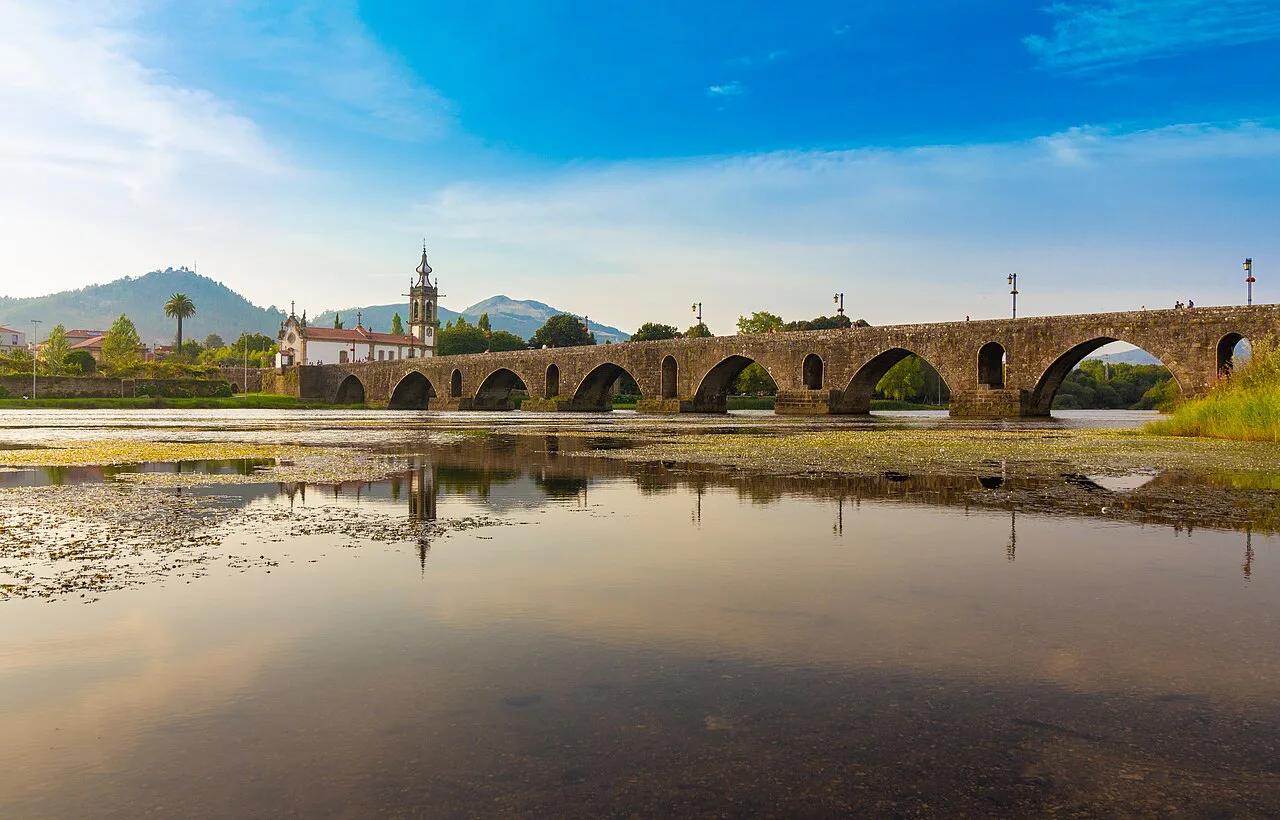
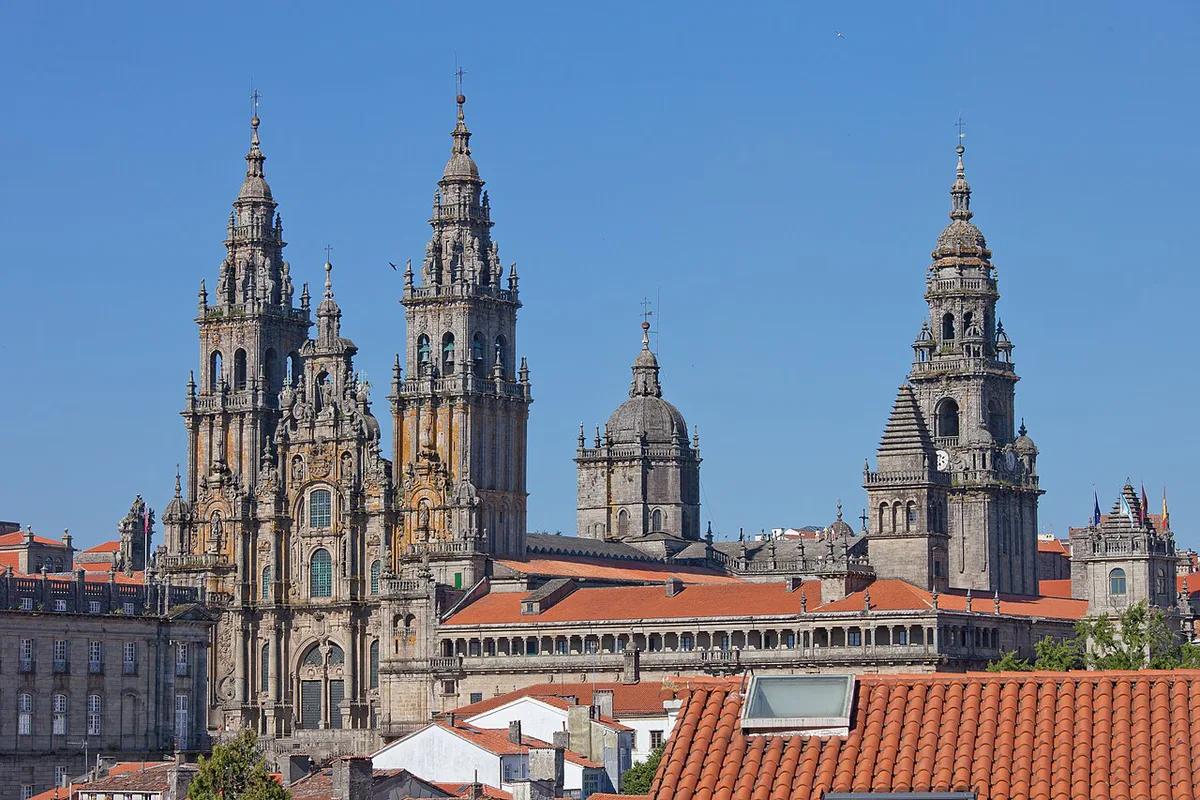
Last updated November 2026: riding the Camino Portugués by bike is feasible, usually over 6 days from Porto to Santiago de Compostela, while Lisbon is a much longer start. It suits leisure riders with decent fitness who can manage consecutive days, cobbles, gravel and later hills; Skedaddle's coastal stages total about 282 km (175 miles). ExperiencePlus! puts the cyclist's Compostela minimum at 200 km, compared with 100 km on foot.
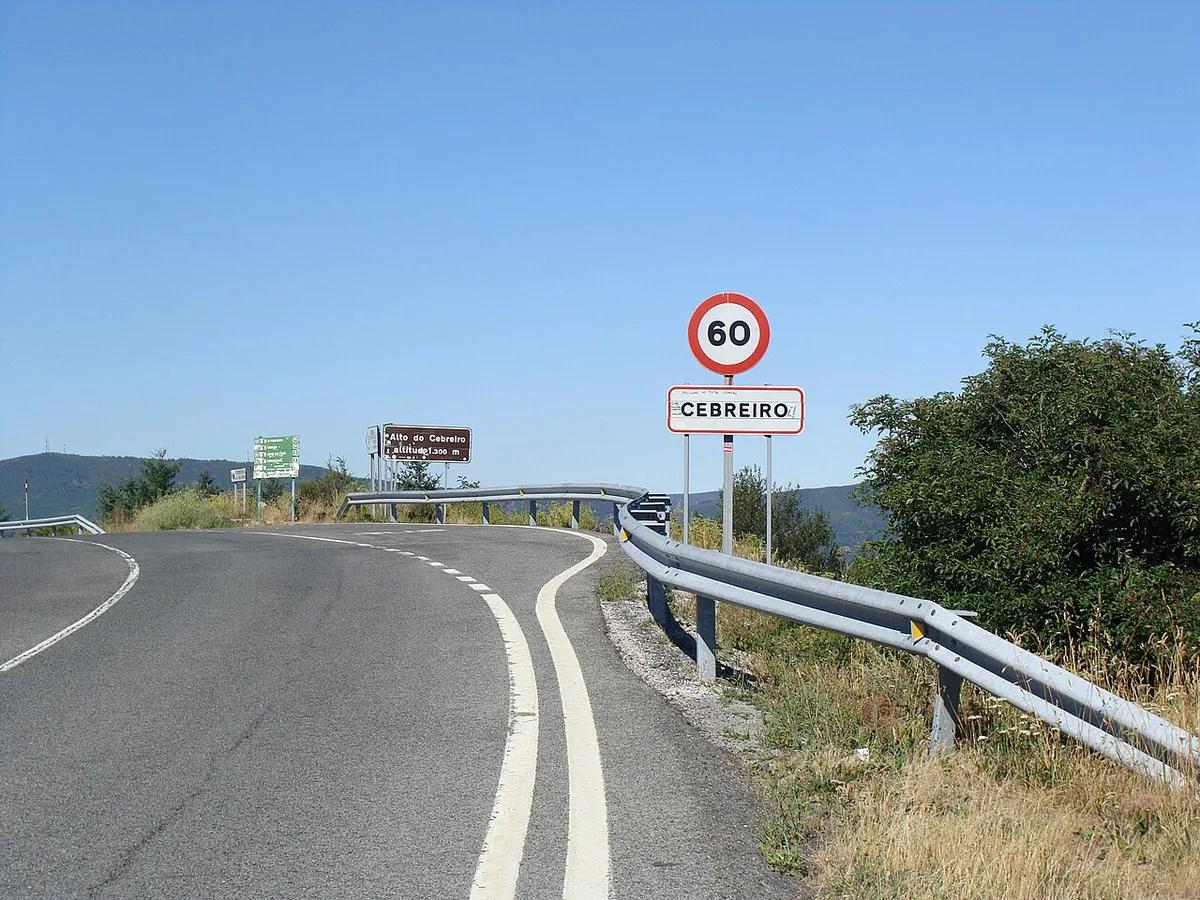
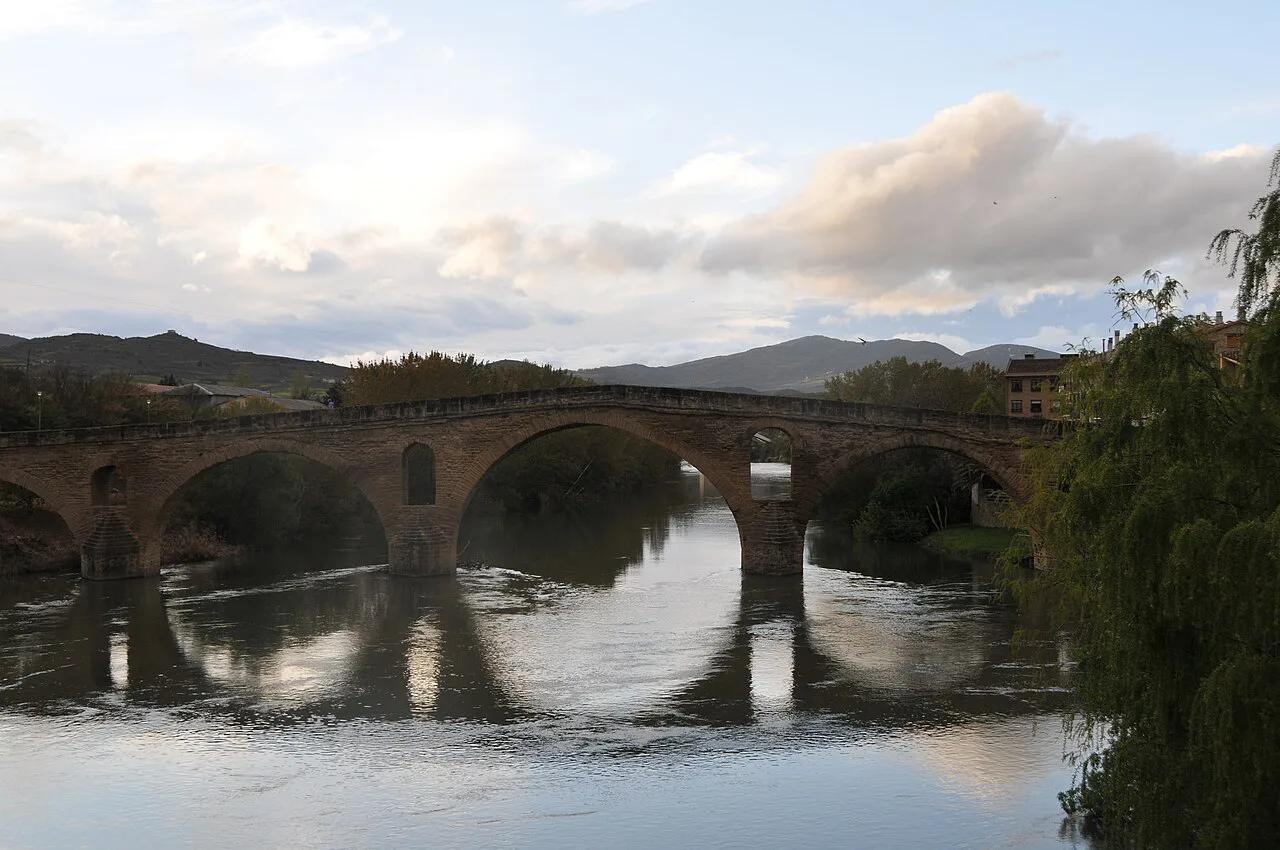
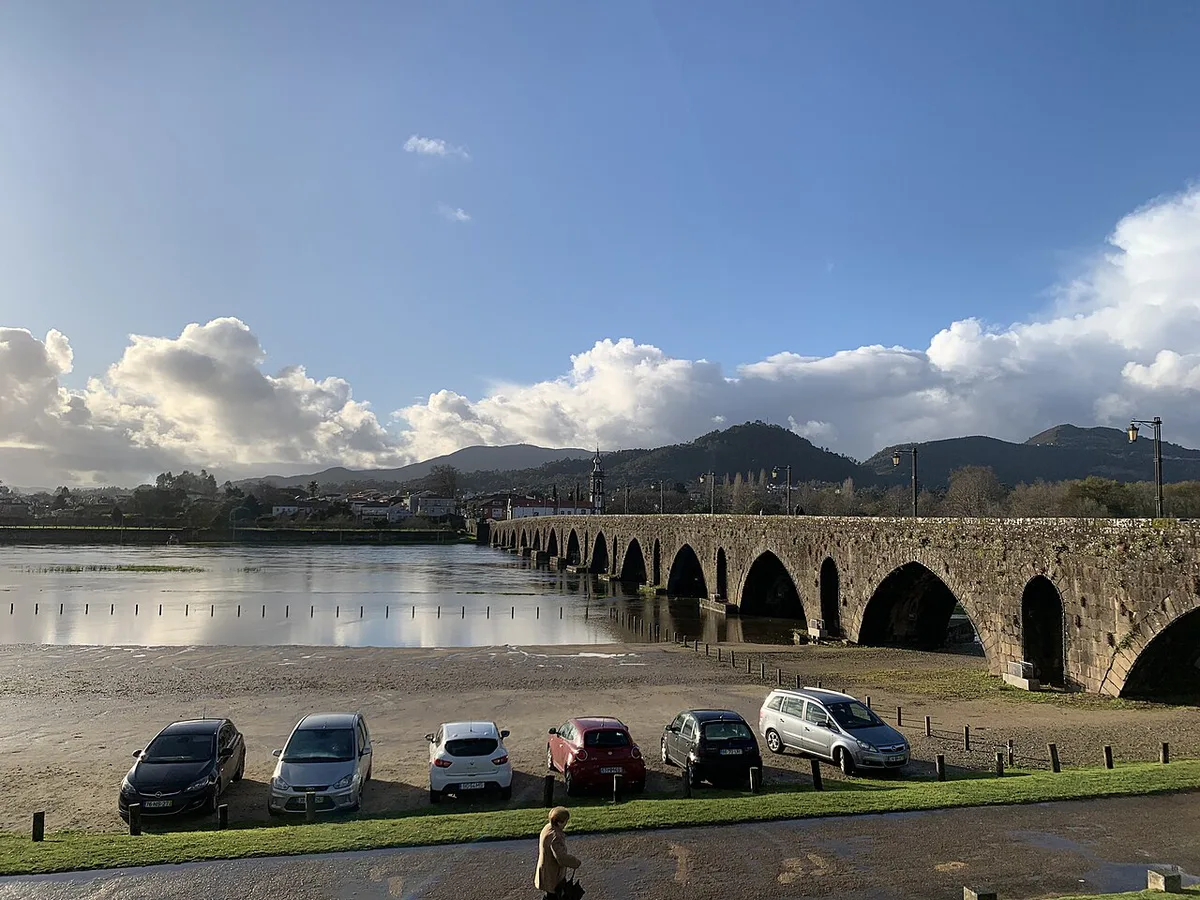
Featured image: Alejandro Piñero Amerio, CC BY-SA 4.0, via Wikimedia Commons.
Which Route for the Camino Portugués by Bike?
Our pick for a first trip is the coast from Porto, because its 6 cycling legs are clearly set out. For gear and preparation across routes, start with our guide to planning a Camino by bicycle. Choose inland or mixed riding only with a mapped track that shows distance, ascent and surfaces. Galicia's official Camino site is a place to research routes on the Spanish side.
Still choosing a pilgrimage? Compare the plan for riding the French Way. Another option is cycling the Northern Way. For a different approach to Santiago, see our Vía de la Plata ride.
| Option | What we know | Before choosing it |
|---|---|---|
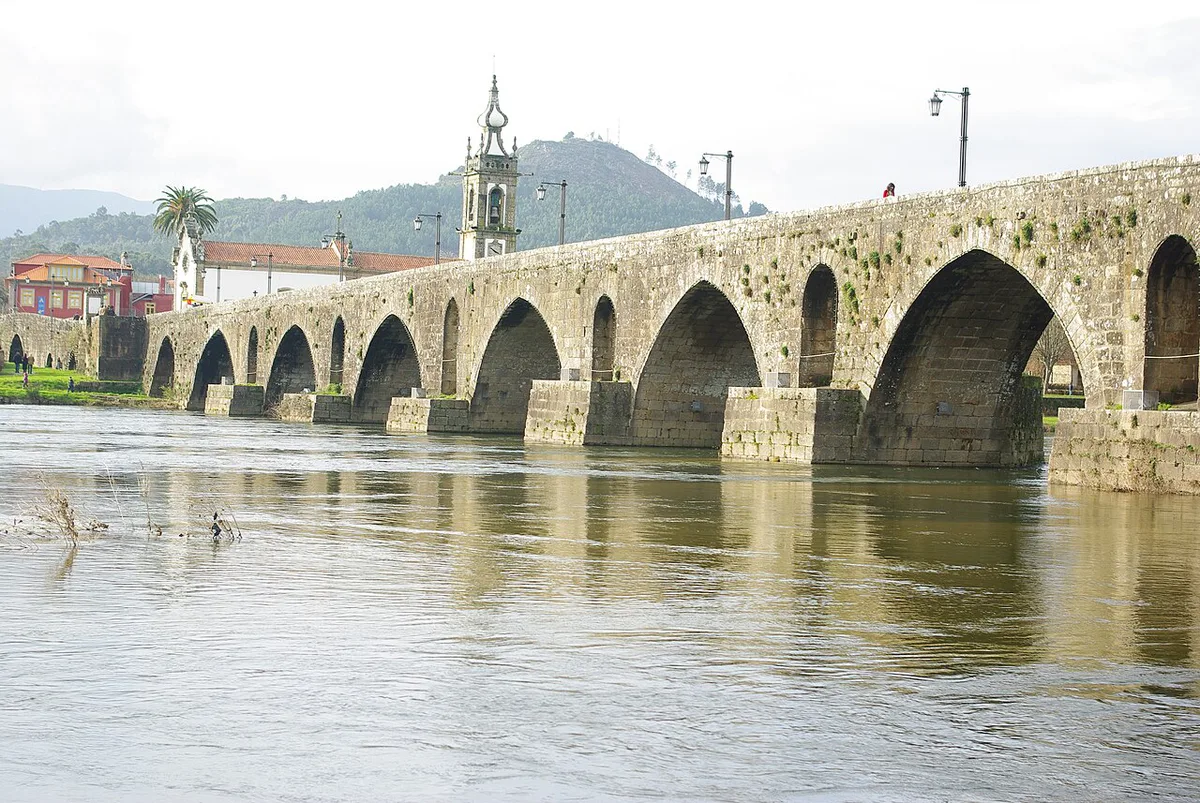
| Coastal | Atlantic riding early on, hillier inland days later; paths, roads, cobbles and gravel; coastal headwind can add effort | Check the Minho boat, wind forecast and urban road sections |
| Inland | Porto, Braga, Ponte de Lima and Valença form a classic cycling axis | Match your track to its named variant; compare climbing, surfaces, traffic, services and border crossing |
| Mixed | ExperiencePlus! combines coastal and inland sections on its guided ride, often using roads near the walking trail | Map every link, overnight stop and water crossing; do not reuse coastal totals |
Porto to Santiago Cycling Stages
Skedaddle's coastal plan has 6 riding legs within an 8-day holiday that includes arrival and departure. Its listed climbs add up to about 1,945 m (6,381 ft). Days 5 and 6 contain 1,000 m of that total, so we would save energy for the finish.
Other plans differ. Dave's Travel Pages gives 280 km for a 7-day coastal outline, including 1 day in Porto. ExperiencePlus! lists roughly 153 miles over 6 biking days on a mix of coastal and inland sections. Use one plan's distances and overnight stops together.
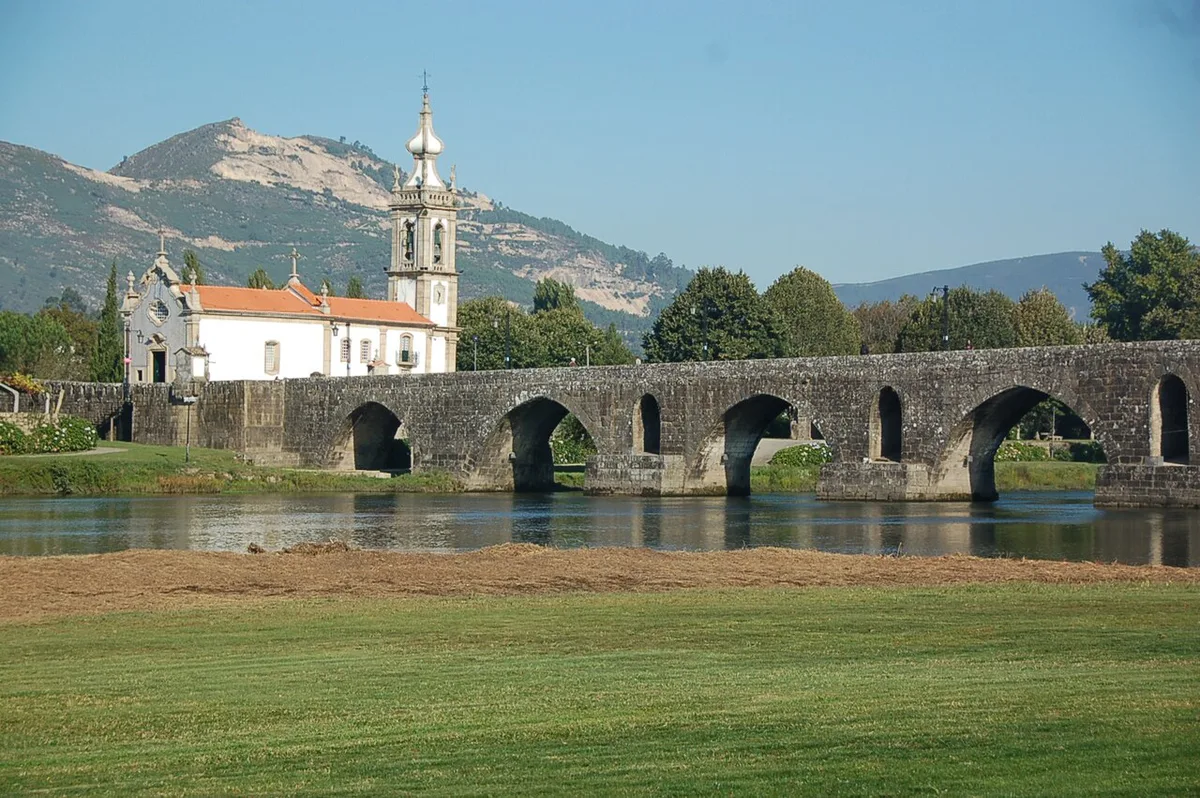
For shorter days, research beds around Viana do Castelo on day 2 or Pontevedra on day 5. Measure both new legs and book the extra night before changing the schedule. All stage figures below are approximate.
| Riding day and stage | Distance | Ascent | Surface and traffic notes |
|---|---|---|---|
| 1: Porto to Esposende via Matosinhos | 60 km / 37 mi | 170 m / 558 ft | Mostly flat; cycle paths, sandy tracks, promenades and local roads; busier around Porto |
| 2: Esposende to Caminha via Viana do Castelo | 57 km / 35 mi | 225 m / 738 ft | Relatively flat; local roads, cobbles, asphalt and gravel paths |
| 3: Caminha to Baiona via A Guarda | 40 km / 25 mi | 280 m / 919 ft | River crossing, then hillier small roads, coastal paths and cycle paths |
| 4: Baiona to Redondela / San Pedro via Vigo | 44 km / 27 mi | 270 m / 886 ft | Undulating; cycle paths and asphalt, with more urban traffic |
| 5: Redondela / San Pedro to Caldas de Reis via Pontevedra | 39 km / 24 mi | 435 m / 1,427 ft | Inland climbing; quiet lanes, old paths and gravel sections |
| 6: Caldas de Reis to Santiago de Compostela | 42 km / 26 mi | 565 m / 1,854 ft | Most sustained climbing; lanes, roads, forest tracks, gravel and hard-packed cycleways |
How Hard Is the Ride?
Skedaddle grades its coastal trip 2–3, or gentle to moderate. Its first 2 stages cover 117 km with 395 m of ascent. By comparison, the last 2 cover only 81 km but climb 1,000 m. Distance alone therefore gives a poor picture of each day's effort.
New riders can consider it if they prepare for hills and mixed surfaces. If you do not ride regularly, Bicigrino advises training for at least 1 month. Build distance and climbing gradually, ride on consecutive days and practice with loaded panniers. Treat 1 month as that company's minimum advice, since your starting fitness matters.
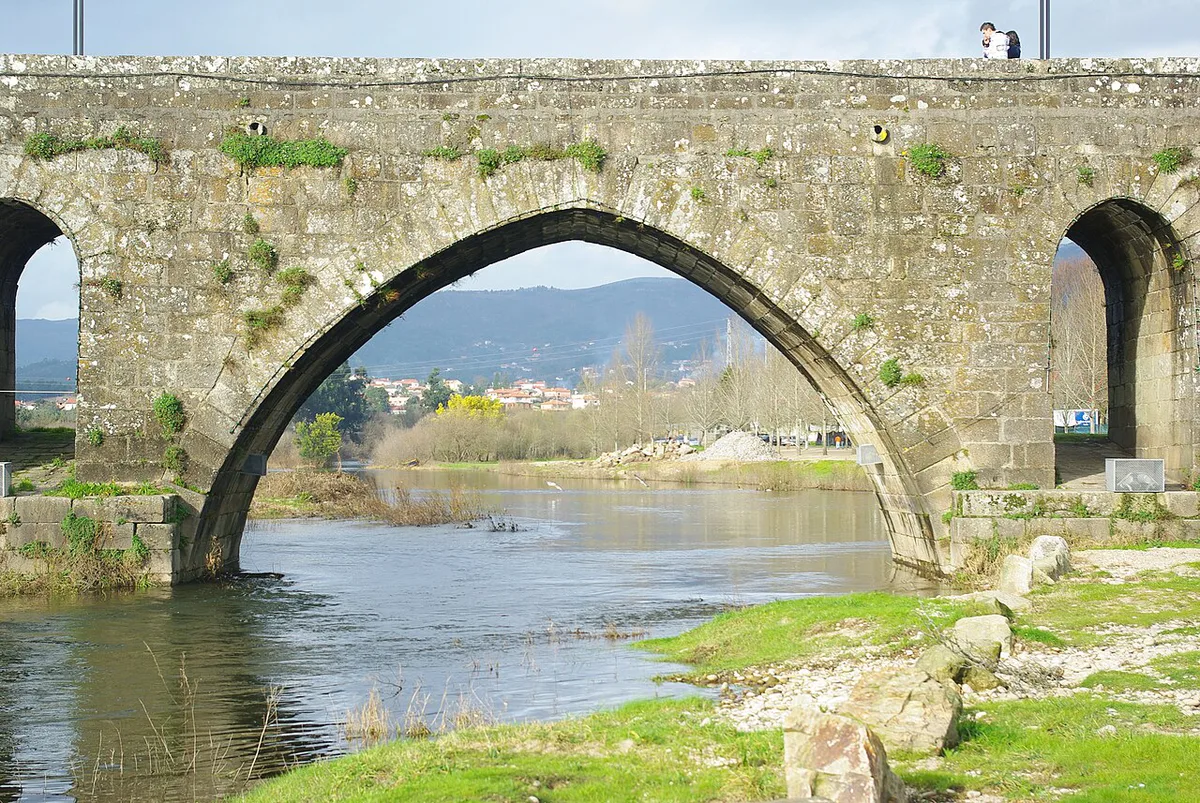
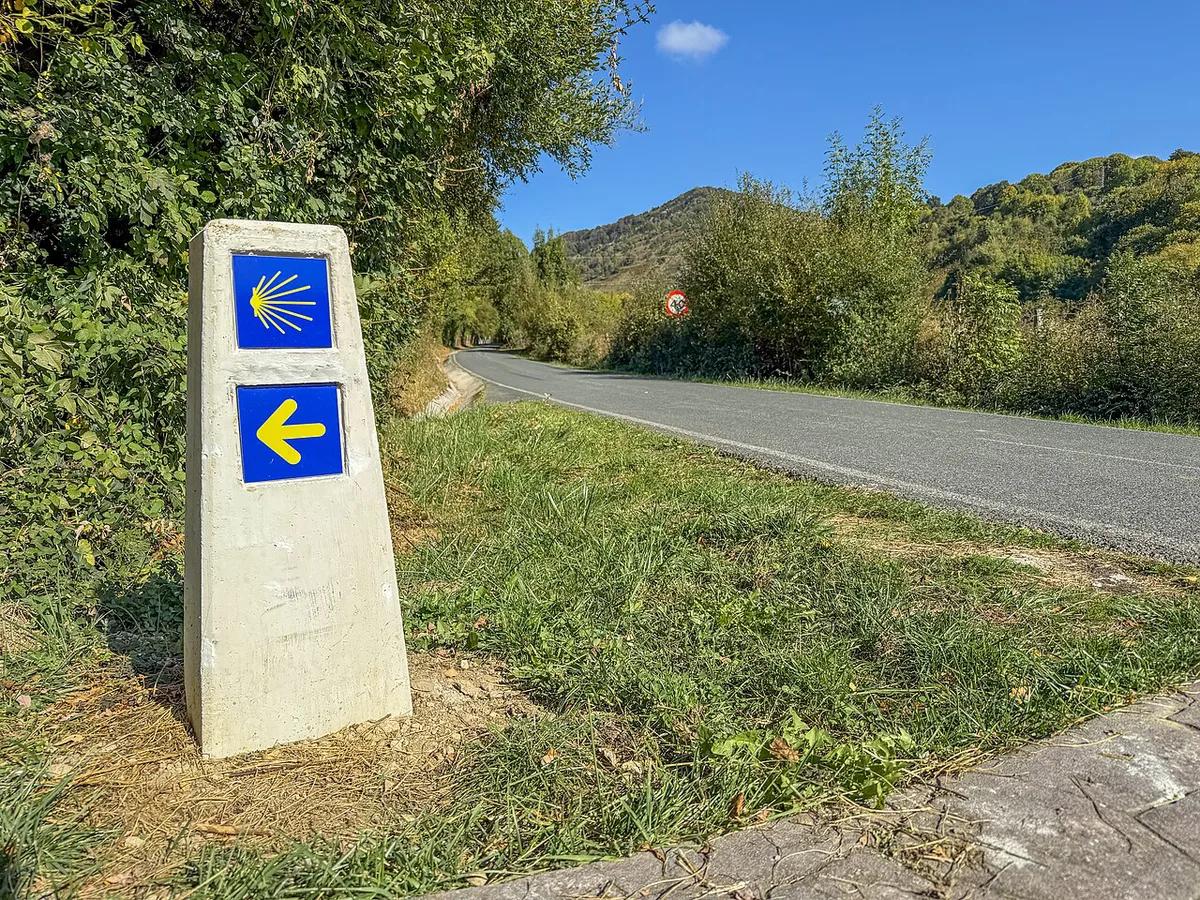
Yellow arrows mark the Camino, but a walking path may not suit your bike. Load a bike-specific GPS track and know where it leaves the footpath. Our comparison explains how riding differs from walking. Slow down around walkers and give them room.
- Cobbles: expect vibration through your hands and body; test your saddle, gloves and contact points beforehand.
- Loose ground: prepare for gravel and sandy tracks, especially when choosing tires.
- Wind: leave spare time for coastal headwinds.
- Traffic: stay alert around Porto, Vigo, Pontevedra and Santiago.
- Repairs: practice fixing punctures and dealing with brake, chain or loose-screw problems.
Crossing the Minho at Caminha
On the coastal plan, riding day 3 starts by crossing the Minho from Caminha into Galicia. Skedaddle describes this link as a ferry. Do not assume a boat will be waiting when you arrive. Before booking either side of the river, confirm current service and bike carriage with the boat operator.
Have a backup transfer or mapped land route ready before day 3. A route through Valença needs its own distance, ascent and overnight plan. Its mileage cannot be swapped into the 40 km Caminha-to-Baiona stage.
- Ask about departure times, reservations and where to board.
- Check weather, tide and cancellation limits.
- Give the operator your bike type, e-bike weight and luggage setup.
- Allow for the time difference between Portugal and Spain when reading schedules.
- Ask the Pilgrim's Office how your chosen crossing or transfer affects Compostela eligibility.
When to Go
We'd start with June or the second half of September, then adjust for the forecast and lodging. Bicigrino recommends June to September, highlighting June, September and early October. Dave's Travel Pages suggests April to October but warns that July may be too hot.
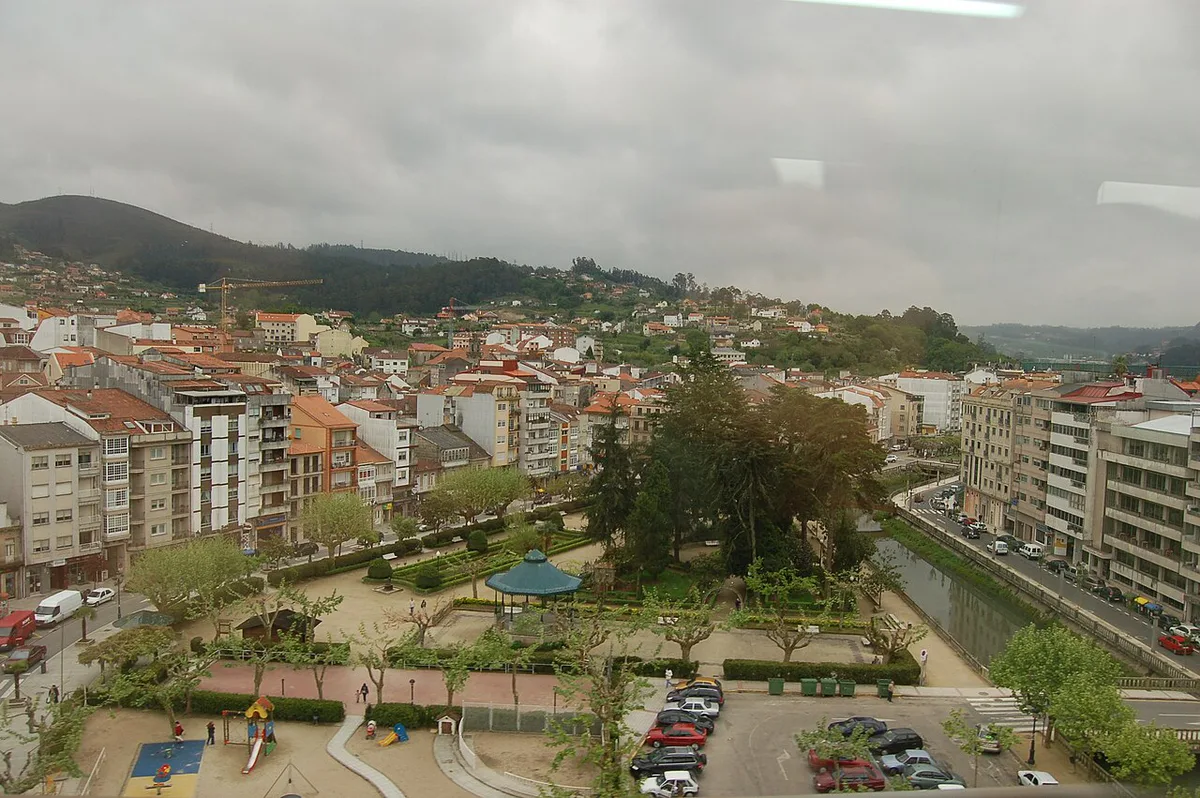
For 2027, Skedaddle's listed self-guided season runs from April 3 to October 31. It excludes July 8 through September 12 because of hotter summer conditions. Those are one operator's booking dates, so independent riders have a separate decision to make. Check heat, rain and wind data from both countries' national weather agencies for your travel window.
Which Bike, and Should You Rent or Bring It?
We'd choose a gravel bike or trekking hybrid with low climbing gears, dependable brakes and tires suited to loose ground. Bicigrino also favors a touring-ready mountain bike or sturdy gravel bike. Skedaddle considers road bikes unsuitable for its coastal route.
An e-bike can reduce effort on climbs. Plan overnight charging and ask about battery range with your load. Also check whether you can lift or load its weight at the river. One rental example from Skedaddle is a typical e-bike with a 90 Nm motor, or a similar model.
Its hire bikes are an optional extra and include a rack and 2 panniers. A puncture kit, phone mount, bottle equipment and lock are also listed. Spare tubes are included except on some tubeless e-bikes; helmets can be requested when booking.
Before reserving elsewhere, compare options for renting a Camino bike. Ask about Porto pickup, Santiago drop-off, one-way fees and repair coverage. If bringing your own, check airline packing rules, box storage and the trip home. Panniers keep luggage with you; a transfer service must explicitly cover your cross-border stops.
- Test your loaded bike before departure, including during the final week of training.
- Check saddle and handlebar position, shoes and gloves.
- Carry a compact rain jacket and light warm layer, while keeping other luggage lean.
Independent, Self-Guided or Guided?
Our choice depends on how much administration you want. Independent travel gives you control over stops, while self-guided packages reduce booking work without putting you in a group. Guided trips suit riders who want people leading the day.
Prices checked November 2026: Skedaddle lists its 2027 self-guided holiday from US$2,210 per person, with a US$375 deposit. Its overview includes accommodation, navigation, transfers, luggage transfer and emergency support, with listed meals. Bike hire costs extra. The balance is not due until 60 days before departure. Read the dated quote for exclusions, room supplements and transfer limits. This package price is not a standard cost for riding the Camino.
| Style | Planning and flexibility | Support to compare | Best fit |
|---|---|---|---|
| Independent | You choose route, stops and bookings; flexibility depends on reservations | Arrange navigation, luggage, repairs and emergency backup | Confident planners who want control |
| Self-guided | Operator arranges a set plan; you ride without a guide | Compare navigation, beds, luggage, bike help and emergency cover | Riders who want fewer bookings and their own pace |
| Guided | Follow the operator's schedule and route | Confirm guides, beds, luggage, bike repairs and emergency help | Riders who value company and on-road leadership |
- Budget for lodging, food and any rest nights.
- Add bike hire or transport, one-way fees and repairs.
- Include luggage transfer, boat fare and any backup transfer.
- Price travel to Porto and home from Santiago separately.
Cyclist Compostela, Credential and Places to Sleep
Plan to carry a pilgrim credential and collect stamps. ExperiencePlus! states that cyclists need at least 200 km for a Compostela, so a shorter walking-distance start may not qualify. Before departure, use the Pilgrim's Office pilgrimage rules to confirm the current distance, stamp and start-point requirements. Ask specifically about pedal-assist bikes and any boat or vehicle transfer.
Cyclists need at least 200 km for a Compostela, so the 42 km final stage from Caldas de Reis cannot qualify on its own.
Pilgrim hostels may not accept cyclists on the same terms as walkers. Bicigrino says walkers usually receive priority. Keep a guesthouse or hotel alternative, and ask each property about admission, booking, secure bike storage and charging. This matters most if you plan a late arrival after a 60 km day.
Getting to Porto and Home From Santiago
Porto Airport is the natural arrival point for this route. Skedaddle says Metro Line E reaches the city center in about 30 minutes. Check the operator's bike rules before taking an assembled or boxed bicycle aboard.
Riding day 6 finishes in Santiago, and the airport is about 15 km (9 miles) from the center, so plan that transfer after a tiring 42 km finish.
At the finish, Santiago de Compostela Airport is about 15 km (9 miles) from the center. Skedaddle gives about 30 minutes by airport bus or 20 minutes by taxi. Ask whether your bike or box can travel before relying on either option.
To return to Porto, plan transport before you leave home. Check bicycle conditions with Portugal's CP rail operator for Portuguese services. For Spanish legs, consult Renfe's train information. Verify the whole connection, including any bus segment. Keep a spare night in your schedule if bike packing or collection could make the departure tight.
Mistakes to Avoid on the Portuguese Camino
Count your arrival, bike collection, 6 riding days, Santiago time and return separately. Shorter stages allow more recovery but may add paid nights. Longer ones leave less margin for headwinds, rough ground or a missed crossing. We'd settle the river backup and journey home before locking in nonrefundable rooms.
- Assuming every section signed for walkers can be ridden.
- Treating the early flat coast as typical of the final 2 stages.
- Combining distances and overnight stops from different route plans.
- Booking around a boat without a current service answer and backup.
- Expecting a pilgrim hostel bed or secure e-bike charging without asking.
- Leaving the return from Santiago until you finish.